A Swedish habit with a word for cleaning out your home before you die
The Swedish Habit Built to Spare Your Family the Clutter, Not the Stories
In 2017, dostadning, or "death cleaning," became Sweden's Word of the Year. It is a real, well-researched way to spare your family the clutter. It was never built to save the stories inside it.
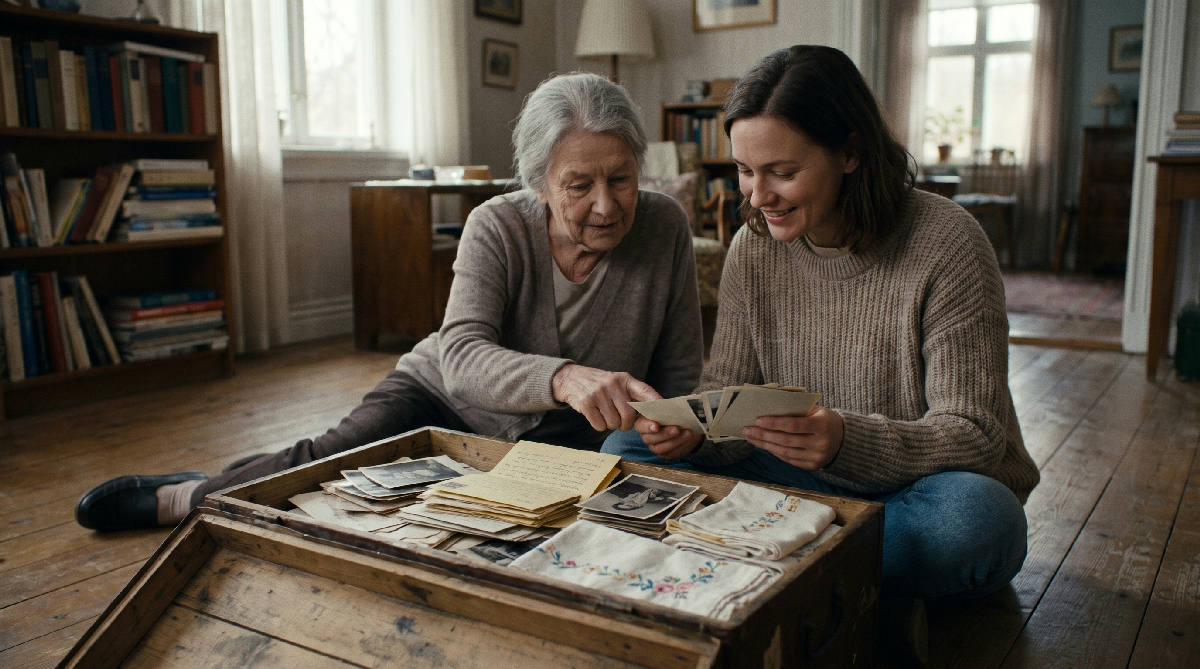
In Sweden there is a word for something most families never plan for: **dostadning**. Do means death. Stadning means cleaning. Put together, it means gently clearing out your own belongings before you die, so the people you love do not have to do it after you are gone. In 2017 it became Sweden's official Word of the Year.
The word reached the rest of the world through a Swedish painter named Margareta Magnusson, who wrote a small book about it called The Gentle Art of Swedish Death Cleaning. It became an international bestseller, published in more than 30 countries. Her advice was simple: start sooner than you think you need to, and **decide for yourself what is worth keeping, instead of leaving that decision to someone grieving.**
Researchers who study the practice describe it as a real shift in how families think about what they leave behind. Ethnologist Lynn Akesson has noted that a century ago, a house full of belongings was a sign of good housekeeping. Today, **clearing it out ahead of time has become its own act of love and care.**
1. What dostadning actually asks you to do
Death cleaning is not one big, sad purge. It is a slow, ongoing habit: sort through your things while you are still around to make the calls, keep what genuinely matters, and let the rest go before it becomes somebody else's decision to make in a hurry.
Akesson's research frames this as a real cultural turn. In an era when most households own more than they will ever need, **choosing to have less has become the more generous choice, not the sadder one.**
Death cleaning turns a lifetime of belongings from a burden your family inherits into a gift you gave them on purpose.
2. A closet can be cleared in an afternoon. A story cannot.
Here is what death cleaning was never built to do: it sorts objects, not the reasons they mattered. You can keep a chipped mixing bowl or let it go, but **either way, the story of whose kitchen it came from, and why it survived three house moves, usually lives in exactly one place: someone's memory.**
Akesson herself notes that the practice remains an ideal many people cannot fully live up to, because parting with things is hard. Parting with the meaning behind them is harder still, and death cleaning was never designed to solve that part.
Clearing out belongings answers the question of what to keep. It never answers the question of why it mattered.
3. The companion habit nobody has a word for yet
If clearing the closet is an act of care, so is sitting down and actually asking about what is in it, while there is still someone there to answer. **The stories behind the keepsakes are the part no drawer, trunk, or donation box can hold onto for you.**
That is the other half of dostadning nobody has named yet. With LifeScribe, Ari asks the questions that pull those stories out of an ordinary phone call, in their own voice, so what gets kept is not just the objects someone chose to save. It is the reasons they mattered in the first place.
Sorting the house is one kind of care. Keeping the stories behind what is in it is the other kind, and it is just as urgent.
My mother spent a whole spring death cleaning her house, her word for it, not mine. She gave away half of it. A year later I realized I had never asked her why she kept the other half. We started doing that on our Sunday calls with Ari instead.Renee, 51, recording her mother's stories on their weekly call
What you get with LifeScribe
- No special occasion required: it works on a call you already have planned.
- Ari asks the questions that get to the why behind what someone kept, not just the what.
- The stories become a keepsake in their own words, the part clearing out a house can never save.
- Grounded in the same instinct behind dostadning: caring for the people you love by not leaving things to chance.
Start free, with nothing to lose
Try it on your very next call this week, free. Nothing to install, nothing to learn. If it does not feel like it saved something a decluttered drawer never could have, you have lost nothing but a few minutes.
**Sweden turned clearing out a house before you die into a national habit built on care.** The stories behind what is inside that house need the same kind of care, and they cannot wait for a spring cleaning. They need the next ordinary phone call you were already going to make.
Keep the stories a decluttered house can never hold onto.
Pick a call you already have planned this week. Let Ari help you ask about the why behind what they kept, not just the what.
Questions grandparents ask us
Is dostadning a real practice, or just an internet trend?
It is real. Dostadning, or Swedish death cleaning, became Sweden's official Word of the Year in 2017 after painter Margareta Magnusson published The Gentle Art of Swedish Death Cleaning, a book now sold in more than 30 countries. Ethnologists, including Lynn Akesson, have studied it as a genuine cultural practice.
What does dostadning actually mean?
It combines the Swedish words for death (do) and cleaning (stadning). It means sorting through and clearing out your own belongings before you die, so your family is not left to do it for you.
Who is Margareta Magnusson?
A Swedish painter who wrote The Gentle Art of Swedish Death Cleaning, the book that introduced dostadning to readers outside Sweden and helped it become the country's 2017 Word of the Year.
Does clearing out someone's belongings mean their stories are gone too?
Not automatically, but the risk is real. Sorting objects decides what stays and what goes. It does not capture why any of it mattered, and that part usually only exists in someone's memory unless it is asked about and kept.
What happens to what I record with Ari?
Each memory becomes a keepsake you and your family can read and share, so the stories behind what someone kept do not disappear along with the closet they came from.
https://getlifescribeapp.com/blog/the-swedish-habit-built-to-spare-the-clutter-not-the-stories