For anyone who thinks family stories are just nice to have
The 20 Questions That Predict How Well Your Kids Handle Hard Times
Two psychologists built a twenty question quiz about family history. It turned out to be the single best predictor of how well a child would handle a hard year.
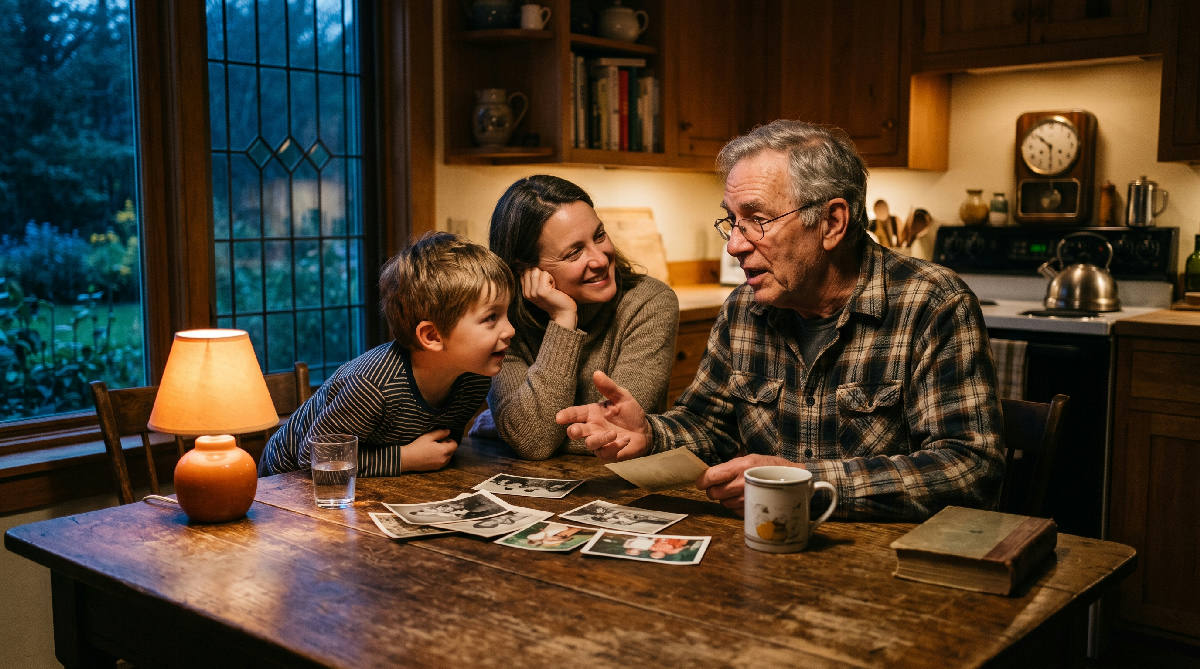
In the early 2000s, psychologists Marshall Duke and Robyn Fivush at Emory University sat down with four dozen families and asked the kids a simple set of questions. Do you know where your grandparents grew up. Do you know how your parents met. Do you know a story about a hard time your family got through together. Twenty questions in all, nothing more complicated than dinner table conversation.
Then they compared the answers to a battery of psychological tests the same kids had already taken. The result surprised even the researchers: how much a child knew about their own family's history turned out to be the single best predictor of that child's self esteem, sense of control over their own life, and how well their family seemed to function, out of everything the study measured.
The researchers followed the same families for two years afterward, through the ordinary hard stretches every family faces: a move, an illness, a loss, a fight that took a while to heal. The kids who had scored highest on the twenty questions were the ones who came through those stretches with less anxiety and stronger friendships. Knowing where you came from, it turned out, was not trivia. It was armor.
1. The quiz was never really about trivia
The twenty questions Duke and Fivush asked were things like: **do you know how your parents met, do you know the story of your own birth, do you know a time someone in your family overcame something hard.** None of it can be looked up. It only exists if someone older already told you.
What the quiz was actually measuring was something researchers call narrative identity: whether a child sees themselves as part of a story bigger than their own single life. Kids who knew the ups and the downs, not just the highlight reel, tended to know they belonged to something that had survived difficulty before.
The quiz's questions cannot be looked up. They only exist if someone already told the story.
2. Knowing your family's history outperformed almost everything else researchers measured
**The more a child knew about their family's history, the higher their self esteem, the stronger their sense of control over their own life, and the more successfully they believed their family functioned.** Duke and Fivush called the twenty question scale the best single predictor of a child's emotional health and happiness that they had found.
It did not seem to matter whether the family stories were happy ones. Kids who knew about a relative who struggled and made it through did just as well, often better, than kids who only heard the easy parts.
The hard chapters counted as much as the happy ones, as long as someone actually told them.
3. The stories that build resilience are also the ones fading fastest
Here is the catch nobody talks about: **almost none of that twenty question history is written down anywhere.** It lives in one grandparent's memory, told at holidays if it gets told at all, and it disappears the day that person is no longer around to answer.
This is the part LifeScribe was built for. During an ordinary phone call, a warm guide asks a relative the kind of questions Duke and Fivush's quiz was built on: where they grew up, how they met, what they got through. No writing, no app to learn, just a phone call and the family story that turns out to matter more than almost anything else you could give a child.
A story that only lives in one memory is one ordinary day away from being gone. That is worth changing before it happens.
I always thought the point was just nostalgia. Then I read what actually helps kids cope, and it is literally just knowing your own family's story. We have been recording my dad's for six weeks now, and my daughter already asks to hear them.Priya, 39, recording her father's stories for her daughter
What you get with LifeScribe
- No writing and no typing: your relative talks, LifeScribe does the rest.
- Works from an ordinary phone call, nothing for them to install or learn.
- A warm guide that asks the kind of questions researchers found actually matter.
- Memories returned as first person keepsakes in their own words and voice.
- A family history your kids can return to long after the story could only live in one memory.
Start free, with nothing to lose
Start with a single memory, free. There is nothing to install and nothing to learn beyond answering the phone. If one phone call and a piece of your family's history does not feel worth it, you have lost a few minutes and gained a story your kids did not have before.
**The relative who holds the answers to those twenty questions will not always be reachable by phone.** The research did not find that any family history helps. It found that knowing it does, while there is still someone left to ask.
Someone in your family is still holding onto history your kids do not know yet. Ask them.
Pick one relative and ask where they grew up, how they met, or what they got through. Spend a few minutes capturing the answer while it still depends on more than one memory.
Questions grandparents ask us
Is this a real study?
Yes. Psychologists Marshall Duke and Robyn Fivush at Emory University developed the twenty question 'Do You Know' scale and tested it with families in the early 2000s, then followed the same families over the next two years.
What kinds of questions were on the quiz?
Simple ones, like whether a child knows where their grandparents grew up, how their parents met, or a story about a time their family got through something hard together.
Does it matter if the family stories are sad ones?
No. Children who knew about relatives who struggled and made it through did just as well, sometimes better, than children who only heard the easy, happy stories.
What if my kids already know some of this?
Most families still find real gaps once they sit down and ask, even families who talk often. The value is in asking the specific questions, not assuming they already came up.
What happens to the memories after they are recorded?
Each conversation becomes a keepsake your family can read and share, building into a family history that does not depend on one relative's memory to survive.
https://getlifescribeapp.com/blog/the-20-questions-that-predict-your-kids-resilience